
Le projet, situé en face de la nouvelle maison communale d’Uccle et à deux pas de la gare de Calevoet, prend place au croisement de la rue de Stalle, de la rue du Wagon et de l’avenue Herinckx.
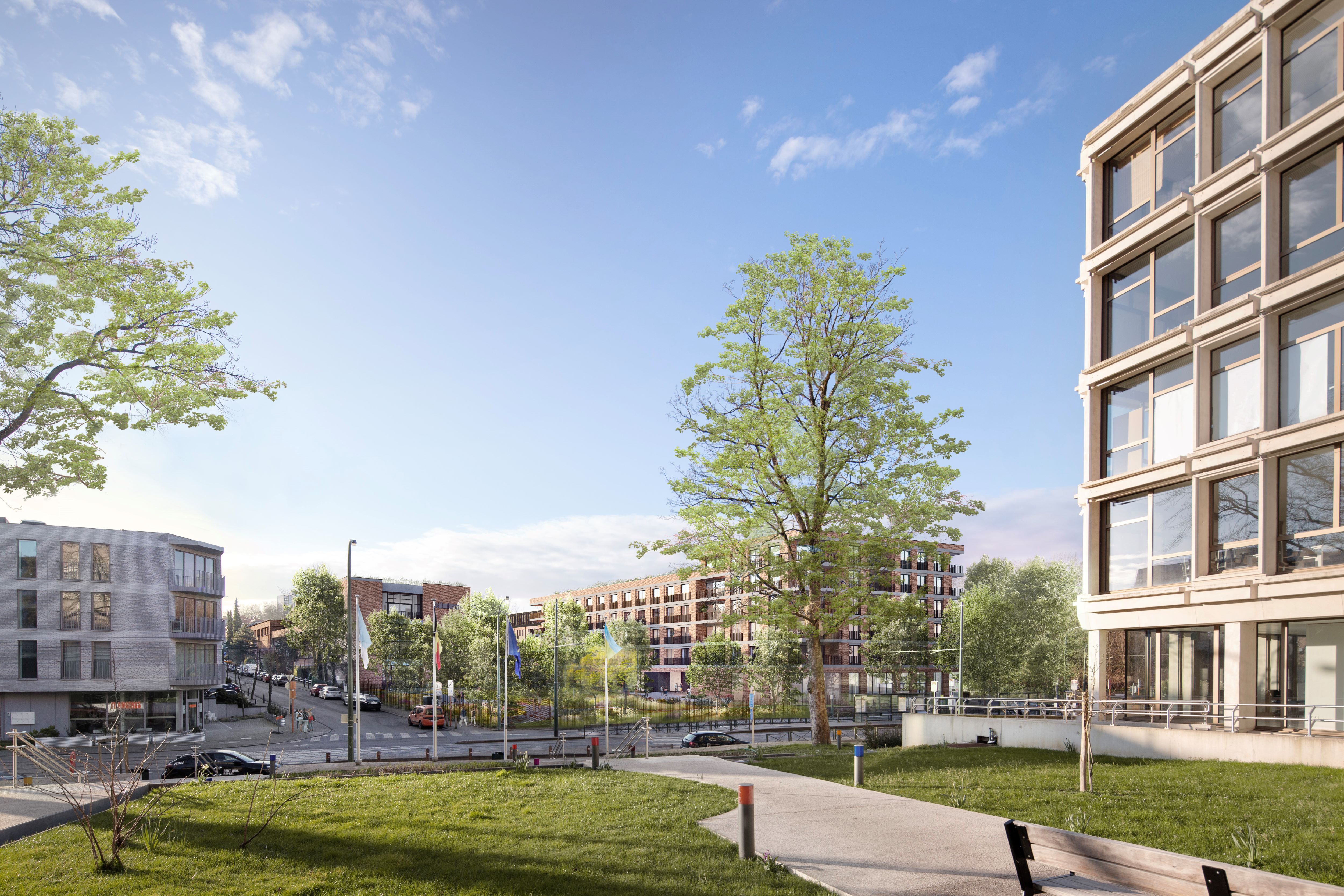
La reconversion de ce site emblématique d’1,7 ha, marqué par ses bâtiments industriels à l’identité forte, intervient dans un quartier en plein redéveloppement.
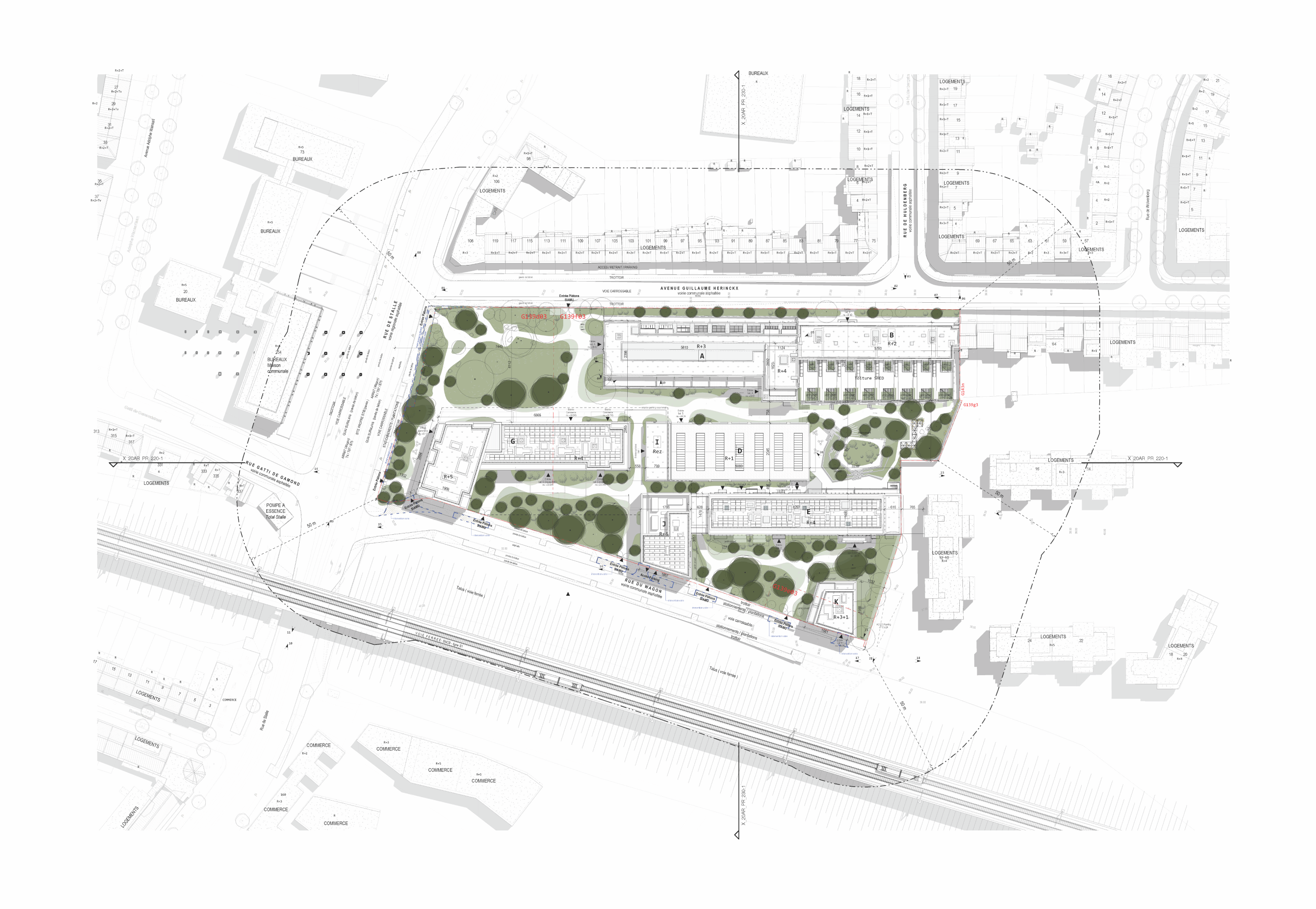
Dans les années 1920, le site accueillit le siège des Entreprises Générales Électro-Techniques (E.G.E.A.). Il a ensuite connu plusieurs phases d’extensions et de démolitions, en fonction des besoins de l’usine. Les bâtiments dédiés à la production, au magasin et aux bureaux ont traversé les époques. Ce patrimoine exceptionnel est remis en valeur.
Le projet profite de cette opportunité pour désenclaver un intérieur d’îlot peu qualitatif et imperméable grâce à la création d’un axe structurant, autour duquel il s’articule.
Naturellement, commerces, horeca, bureaux et équipements s’installent de part et d’autre de cet axe. Près de 55 % des rez-de-chaussée sont activés, tandis que les 163 unités de logement prennent place principalement aux étages.
Le site se veut perméable : des connexions sont créées entre les différents espaces publics, semi-privatifs et privatifs.
La création de quatre nouveaux bâtiments implantés le long de la rue du Wagon a pour objectif de redonner une forme d’urbanité à cette rue en impasse, actuellement déstructurée et enclavée en bordure du talus de chemin de fer.
Le rapport entre les pleins et les vides permet de séquencer la rue par une alternance entre fronts bâtis et jardins, créant ainsi un ensemble cohérent. Le gabarit de ces nouveaux bâtiments se veut en adéquation avec ceux de la maison communale, du chemin de fer et des constructions avoisinantes. L’utilisation de briques de réemploi comme matériau de façade contribue à créer une unité et un dialogue avec les bâtiments industriels existants.
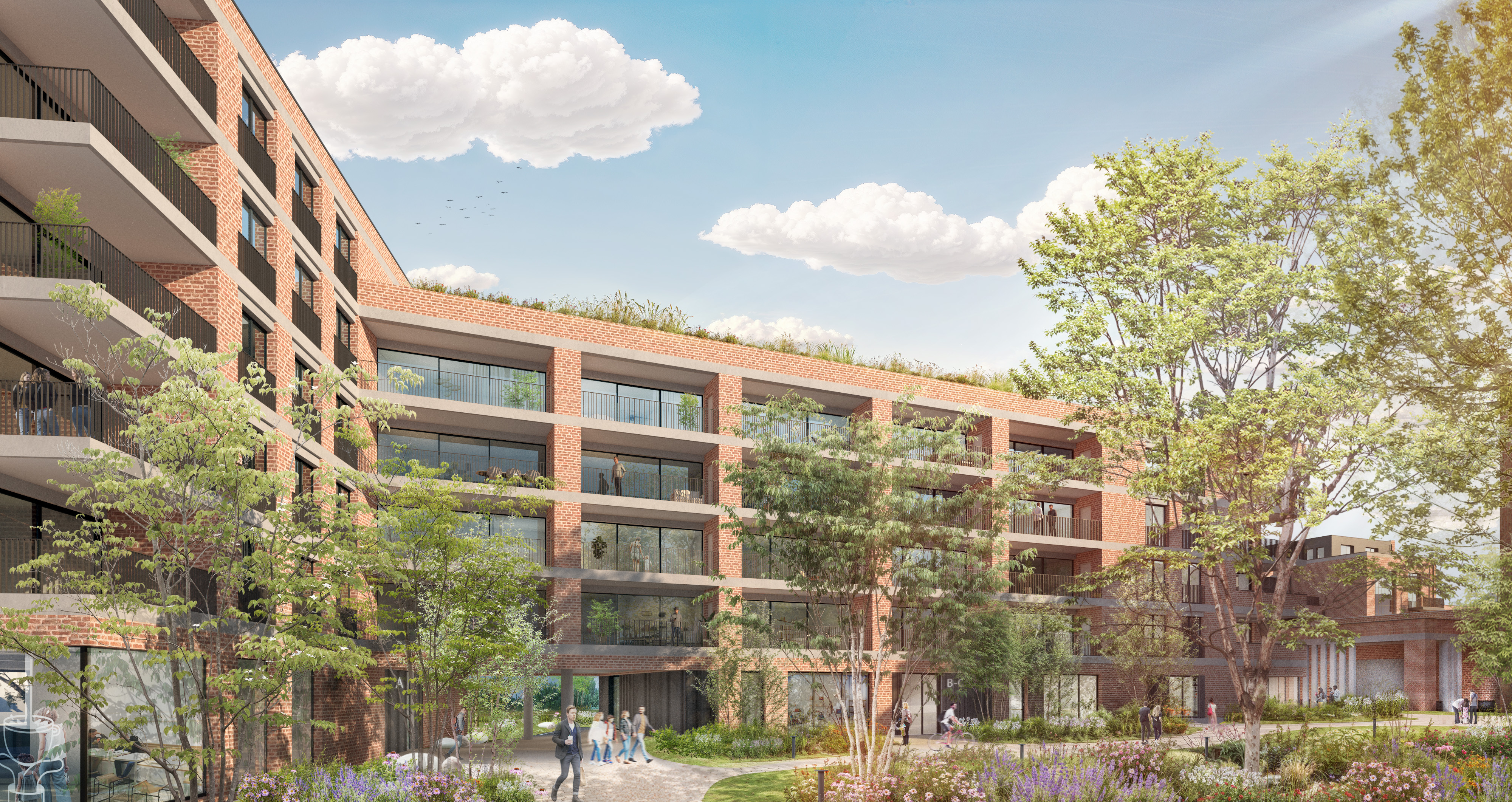
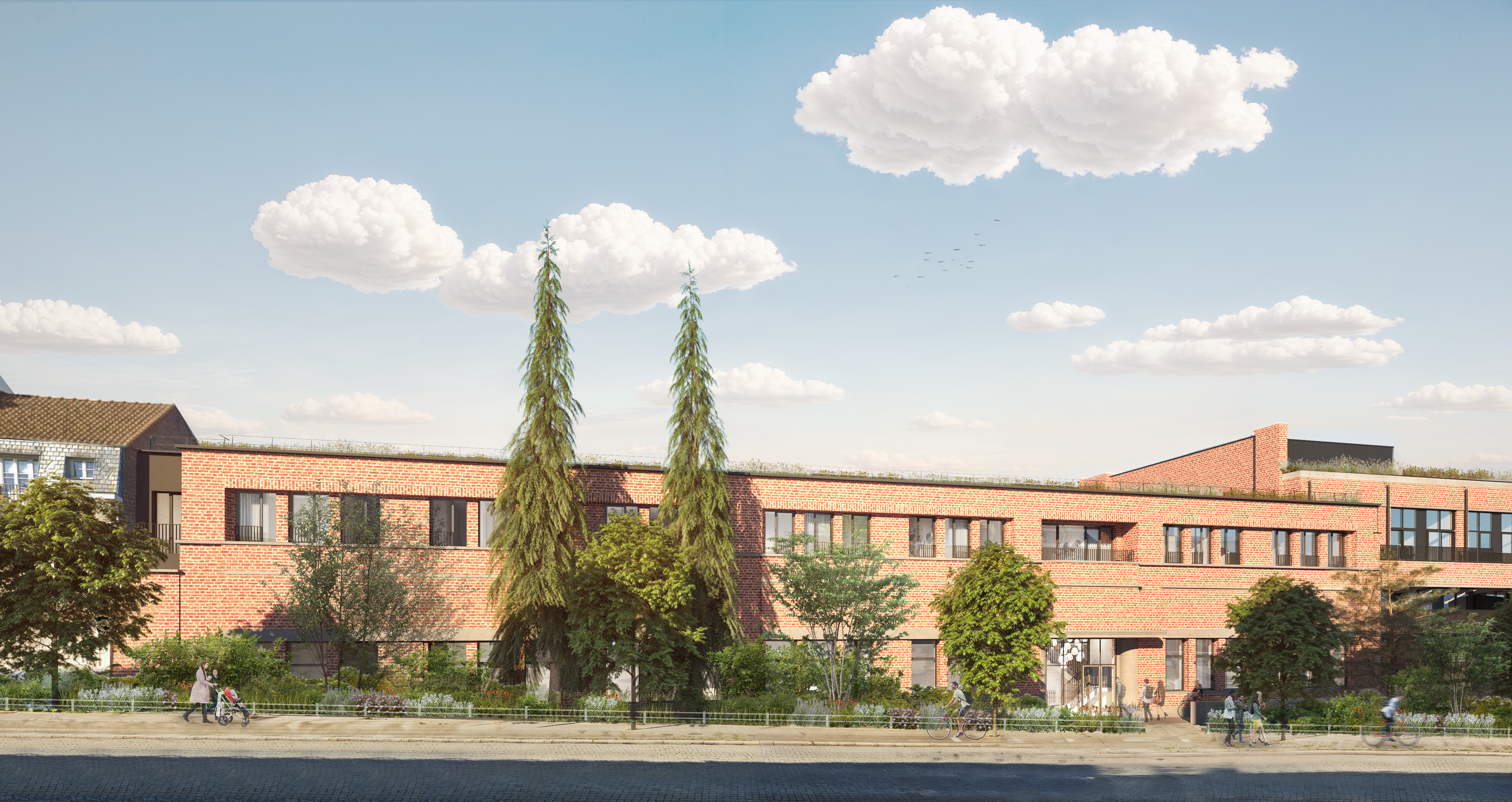

Le projet prévoit une grande diversité typologique : la transformation des bâtiments existants en logements permet l’aménagement de duplex, lofts et appartements traditionnels. En parallèle une réflexion a été menée sur l’adaptabilité des logements dans les bâtiments neufs.
L’absence de sous-sols sous les bâtiments existants a conduit à la réalisation d’un parking de 200 emplacements sur trois niveaux, en tenant compte des contraintes liées à la présence quasi affleurante de la nappe phréatique. Un édicule dédié exclusivement à la mobilité douce est implanté au centre du site et permet aux usagers cyclo-piétons d’accéder aux différents niveaux de sous-sol.
La mixité programmatique favorise la mise en place de synergies énergétiques. Animé par une volonté de ne pas recourir aux énergies fossiles, le projet prévoit une production d’énergie centralisée via des pompes à chaleur géothermiques, une technologie particulièrement efficace dans ce contexte.
L’espace végétalisé, laissé à l’abandon durant plusieurs années et conçu par Jean-Noël Capart, sera revalorisé. Il contribuera également à la gestion active de l’eau sur la parcelle, dans une logique de zéro rejet. En parallèle, deux nouveaux espaces verts sont créés et le site totalement délesté de la présence de la voiture.
The project, located opposite the new Uccle town hall and just a stone’s throw from Calevoet station, sits at the crossroads of Rue de Stalle, Rue du Wagon, and Avenue Herinckx.
The reconversion of this emblematic 1.7 ha site, marked by industrial buildings with a strong identity, takes place in a neighborhood undergoing major redevelopment.
In the 1920s, the site became the headquarters of the Entreprises Générales Électro-Techniques (E.G.E.A.). It later went through several phases of extensions and demolitions, depending on the needs of the factory. The production, storage, and office buildings have survived through time, and this exceptional heritage is now being brought back into the spotlight.
The project seizes this opportunity to open up a low-quality, impermeable inner block through the creation of a structuring axis, around which the development is organized.
Along this axis, shops, horeca, offices, and facilities naturally settle. Nearly 55% of the ground floors are activated, while the 163 housing units are mainly located on the upper levels.
The site is designed to be permeable: new connections are created between public, semi-private, and private spaces.
The creation of four new buildings along Rue du Wagon aims to restore urbanity to this cul-de-sac, currently fragmented and enclosed by the railway embankment. The alternation between built fronts and gardens structures the street into a coherent whole. The scale of these new buildings is designed to match that of the town hall, the railway, and the surrounding constructions. The use of reclaimed bricks as façade material contributes to unity and fosters dialogue with the existing industrial buildings.
The project provides a wide typological diversity: the transformation of existing buildings into housing allows for the creation of duplexes, lofts, and traditional apartments. At the same time, particular attention has been given to the adaptability of the housing in the new buildings.
The absence of basements under the existing buildings has led to the construction of a 200-space car park on three levels, taking into account the constraints of the almost surfacing groundwater table. A pavilion dedicated exclusively to soft mobility is located at the center of the site, allowing cyclists and pedestrians to access the various underground levels.
The programmatic mix encourages the development of energy synergies. With the strong ambition to avoid fossil fuels, the project foresees centralized energy production via geothermal heat pumps, a particularly effective technology in this context.
The landscaped area, which had been neglected for several years and designed by Jean-Noël Capart, will be revitalized. It will also contribute to active water management on the site, aiming for zero discharge. In addition, two new green spaces will be created, and the site will be entirely freed from car traffic.
Het project, gelegen tegenover het nieuwe gemeentehuis van Ukkel en op een steenworp van het station Kalevoet, bevindt zich op de kruising van de Stallestraat, de Wagonstraat en de Herinckxlaan.
De reconversie van deze emblematische site van 1,7 ha, gekenmerkt door zijn industriële gebouwen met een sterke identiteit, vindt plaats in een wijk in volle herontwikkeling.
In de jaren 1920 huisvestte de site het hoofdkantoor van de Entreprises Générales Électro-Techniques (E.G.E.A.). Vervolgens kende het terrein verschillende uitbreidings- en sloopfasen, afhankelijk van de behoeften van de fabriek. De gebouwen bestemd voor productie, opslag en kantoren hebben de tijd doorstaan en dit uitzonderlijk patrimonium wordt vandaag opnieuw in de verf gezet.
Het project grijpt deze kans aan om een weinig kwalitatieve en ondoorlaatbare binnenruimte te openen door de aanleg van een structurerende as, waarrond het geheel wordt georganiseerd.
Langs deze as vestigen zich op natuurlijke wijze handelszaken, horeca, kantoren en voorzieningen. Ongeveer 55 % van de gelijkvloerse verdiepingen wordt geactiveerd, terwijl de 163 wooneenheden voornamelijk op de bovenverdiepingen worden ingericht.
De site wil doorwaadbaar zijn: er worden verbindingen gecreëerd tussen de verschillende openbare, semi-private en private ruimtes.
De bouw van vier nieuwe gebouwen langs de Wagonstraat heeft tot doel deze doodlopende straat, die momenteel versnipperd en ingesloten is langs de spoorwegberm, opnieuw een stedelijk karakter te geven. De afwisseling tussen bebouwing en tuinen zorgt voor een coherente opbouw. Het volume van deze nieuwe gebouwen is afgestemd op dat van het gemeentehuis, de spoorlijn en de omliggende constructies. Het gebruik van recuperatiebakstenen als gevelmateriaal draagt bij tot een eenheid en een dialoog met de bestaande industriële gebouwen.
Het project voorziet een grote typologische diversiteit: de transformatie van de bestaande gebouwen in woningen maakt de creatie mogelijk van duplexen, lofts en klassieke appartementen. Tegelijk werd nagedacht over de aanpasbaarheid van de woningen in de nieuwbouw.
Het ontbreken van kelders onder de bestaande gebouwen leidde tot de aanleg van een parkeergarage met 200 plaatsen op drie niveaus, rekening houdend met de bijna aan de oppervlakte liggende grondwaterlaag. Een paviljoen dat uitsluitend bestemd is voor zachte mobiliteit bevindt zich in het centrum van de site en geeft fietsers en voetgangers toegang tot de verschillende ondergrondse niveaus.
De programmatische mix bevordert de uitbouw van energetische synergiën. Gedreven door de ambitie geen gebruik te maken van fossiele brandstoffen, voorziet het project in een centrale energieproductie via geothermische warmtepompen, een technologie die bijzonder doeltreffend is in deze context.
De groenruimte, jarenlang verwaarloosd en ontworpen door Jean-Noël Capart, zal opnieuw worden opgewaardeerd. Ze zal ook bijdragen aan het actief waterbeheer op het terrein, met als doel nul afvoer. Daarnaast worden twee nieuwe groenzones gecreëerd en wordt de site volledig ontdaan van autoverkeer.


